The 40-Meter EFHW
← All Build JourneysProject 01 · Built and tested; improvements ongoing
A Transformer, Some Wire, and a Lesson in Humility
I wanted to get on 40 meters.
Simple enough, right?
I had my Yaesu FT-450D, a power supply, and plenty of enthusiasm. What I didn't have was a decent HF antenna.
Naturally, my first thought wasn't to order a complete commercial antenna. Where's the fun in that?
I went with an end-fed half-wave antenna, or EFHW. The design looked straightforward enough: a transformer, a long piece of wire, and some coax.
The real reason this antenna was first, the kit was for sale at my first ham club meeting.
The transformer
Winding the transformer seemed like the sort of project that ought to be right up my alley.
I've repaired enough electronics to feel comfortable around wire, solder, terminals, and connectors. But RF introduces some interesting complications.
For one thing, a transformer that looks like a short circuit to a multimeter may be behaving exactly as intended at radio frequencies.
That was one of my first discoveries.
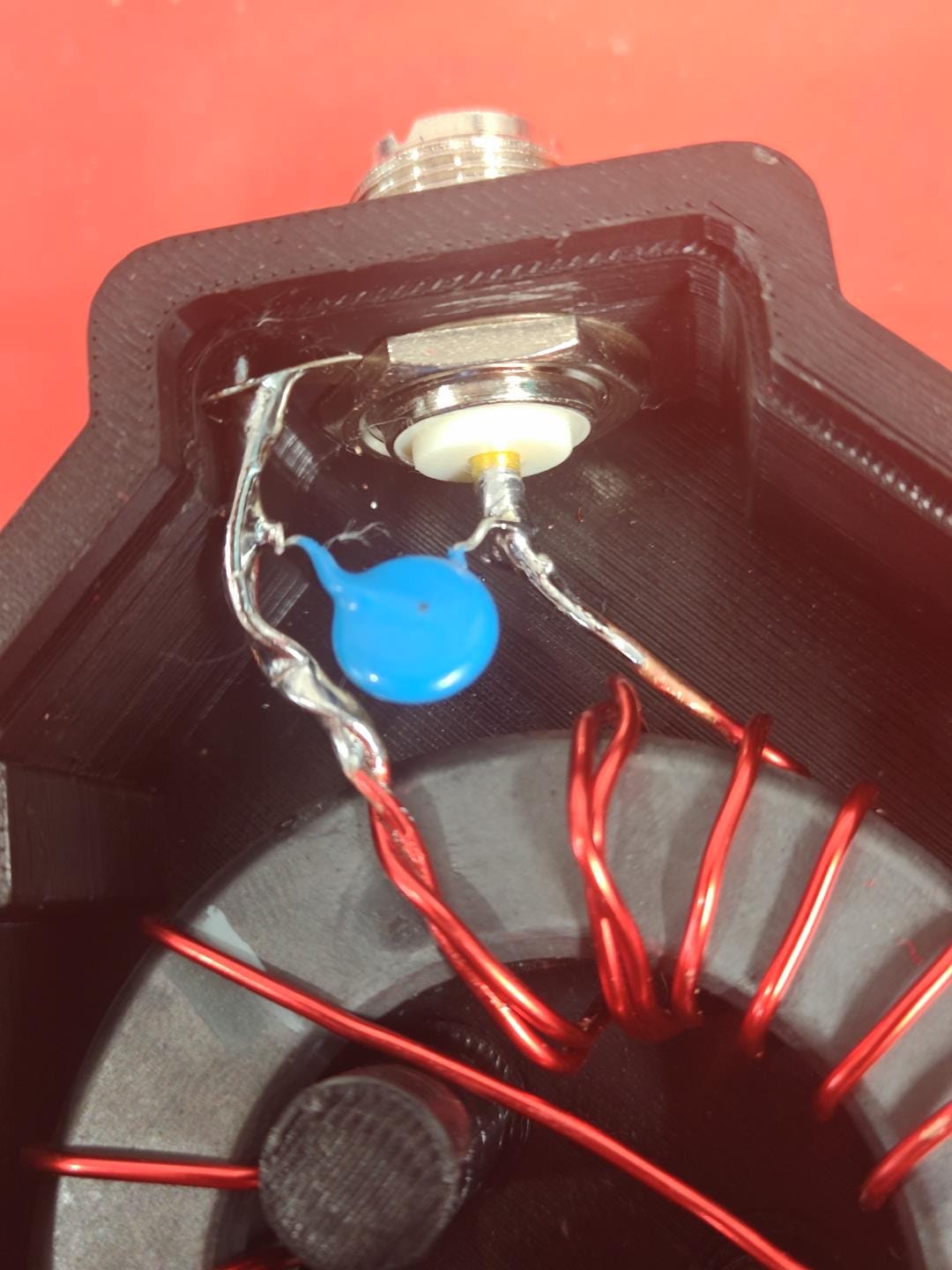
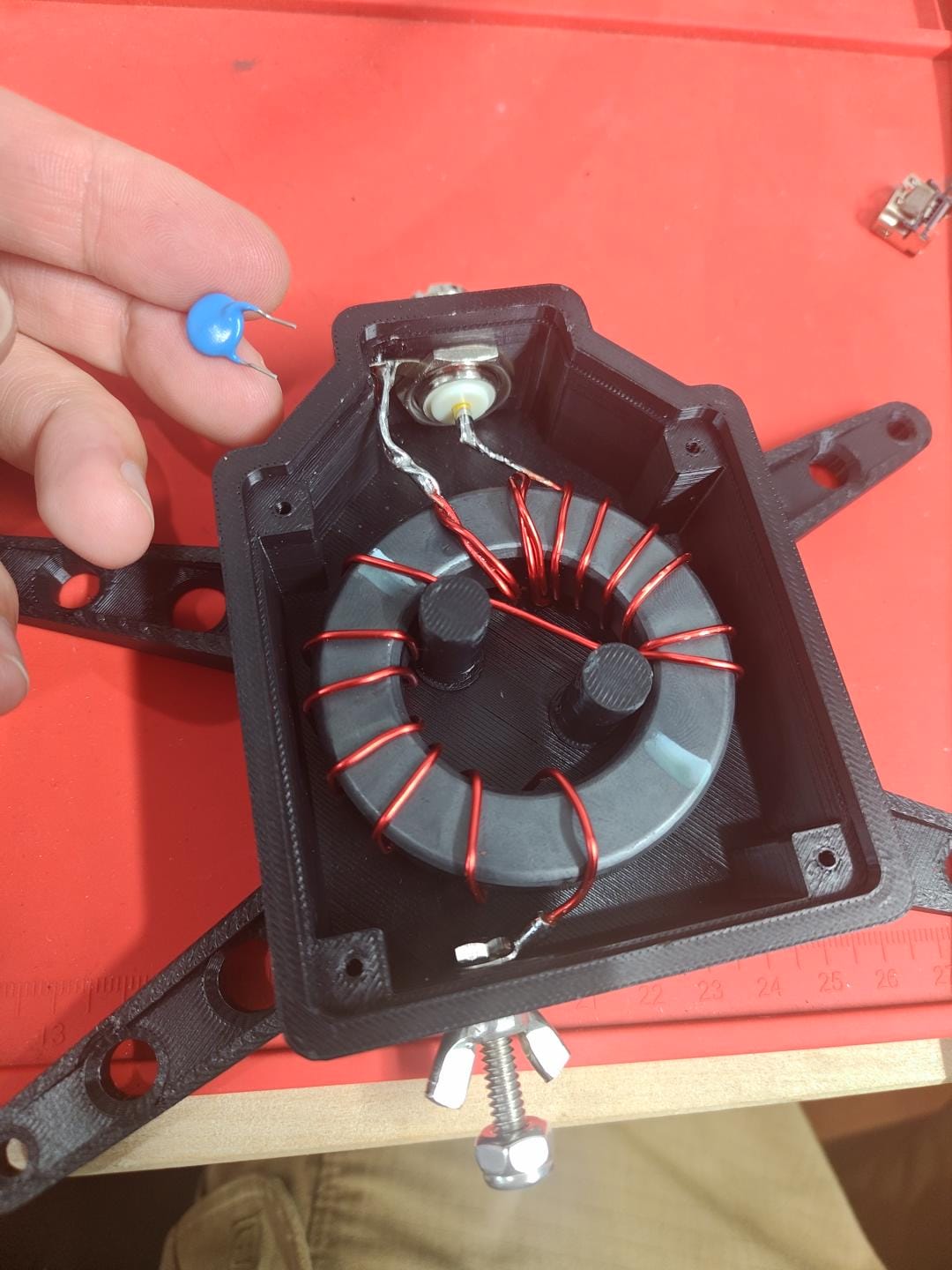
I wound the toroid (this part was just crap, it's near impossible to tell from pictures how to do it), connected the transformer to an SO-239 connector, and spent some time second-guessing the winding arrangement. I checked continuity, compared my work to reference photographs, and tried to convince myself I had everything where it belonged.
At one point, I was counting individual windings in photographs.
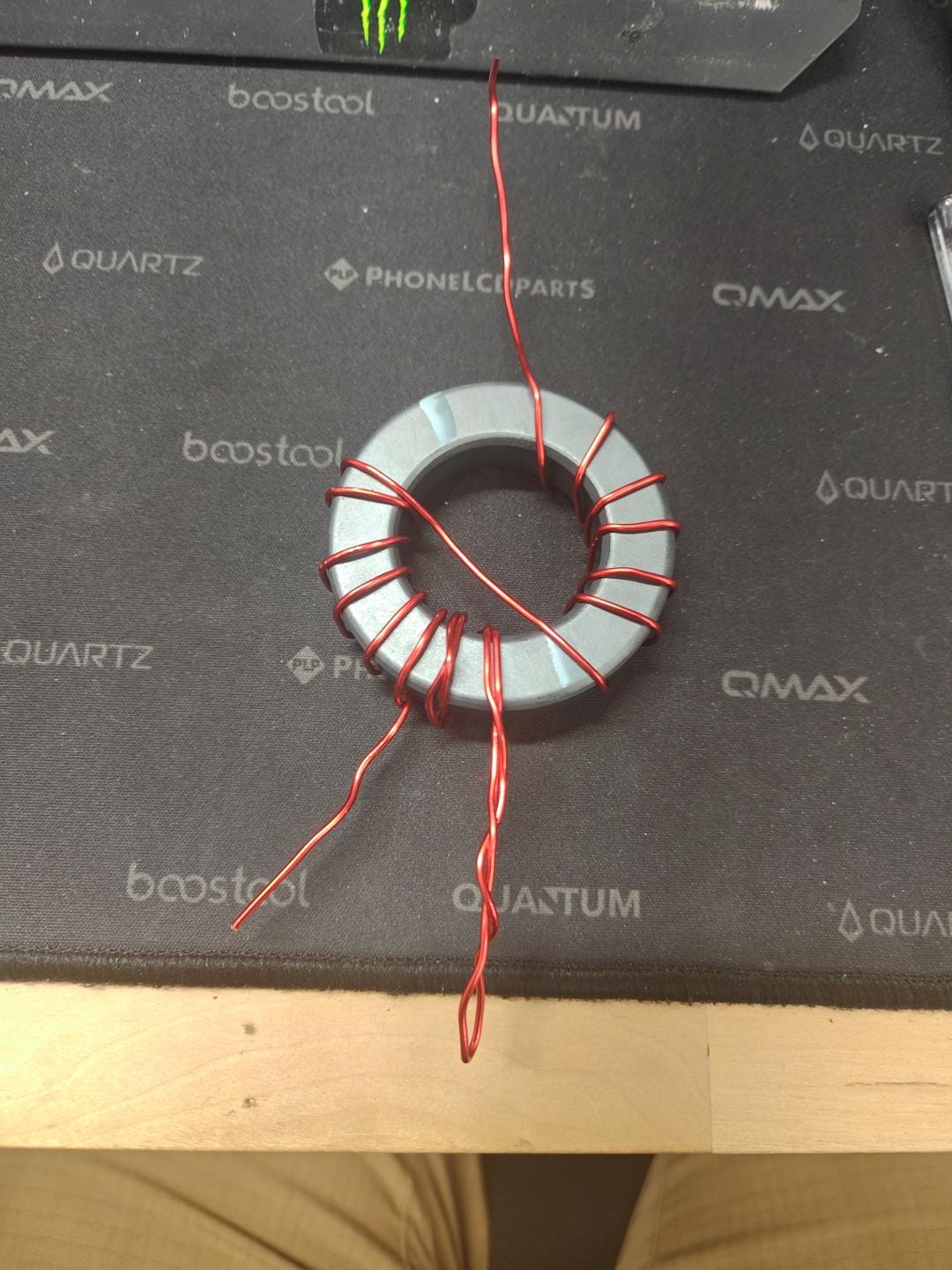
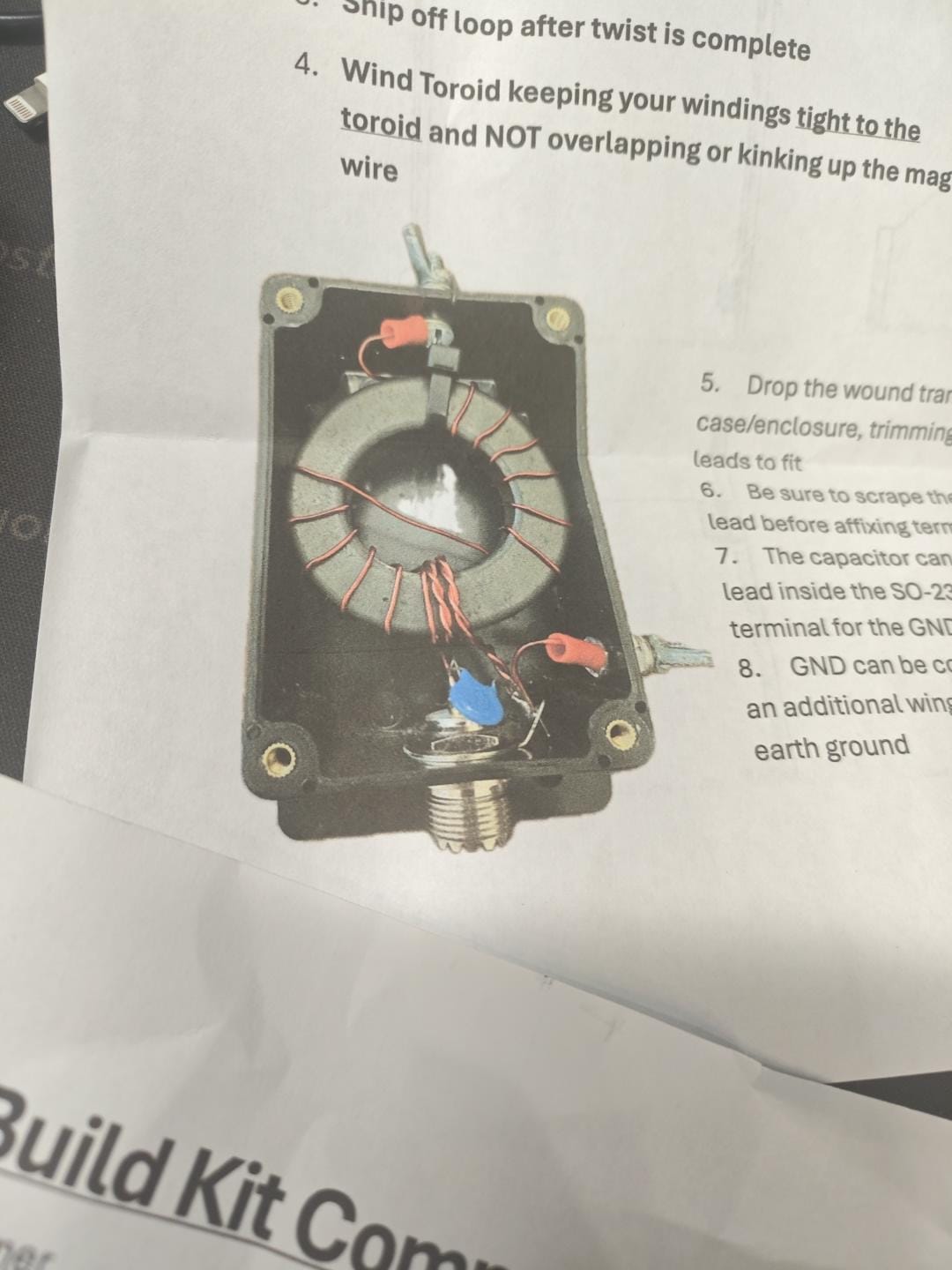
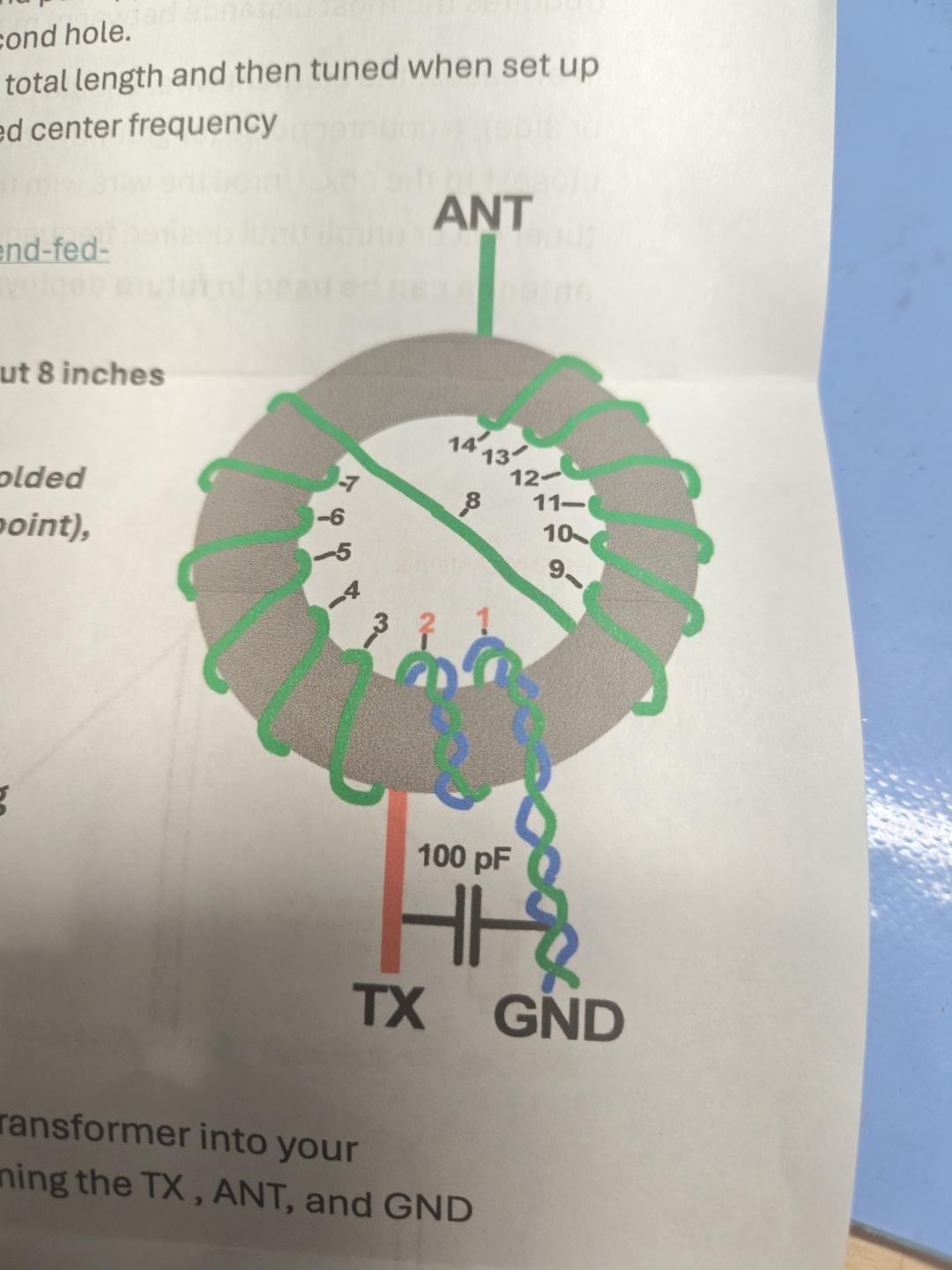
Eventually I had something that looked like an EFHW transformer.
Whether it actually worked was another question.
Getting wire in the air
The next part was finding somewhere to put the antenna.
I eventually stretched the wire between two elevated points on my property. The feedpoint was approximately 16 feet above ground, with the far end reaching roughly 30 feet.
Was it an ideal installation? Probably not.
Was there a wire antenna hanging in the air that hadn't been there earlier?
Absolutely.
The moment of truth
I connected everything to the FT-450D and checked the SWR.
Roughly 3:1 around 7.1 MHz.
Not exactly good.
I could use the radio's internal tuner to get a reading of approximately 1:1, but I was beginning to understand that making the transmitter happy wasn't necessarily the same thing as making the antenna efficient.
Still, I could hear people!
I was picking up conversations on 40 meters, including activity around 7.195 MHz. After experimenting with the radio's attenuation and noise reduction controls, I had some pretty decent reception.
That was exciting.
Then I tried transmitting.
Nothing.
I called between conversations. I tried approximately 45 watts. Later, I increased the power to around 65 watts.
Still nothing.
At one point, I was seriously questioning whether the radio itself was defective.
I had a functioning receiver, a tuner indicating a match, and apparently no ability to get anybody to acknowledge my existence.
I was getting aggravated.
Where things stand
I haven't given up on the antenna.
I've since acquired an antenna analyzer, which should give me a better picture of its actual resonant behavior.
Instead of just adjusting things and hoping, I can measure the impedance and SWR across a range of frequencies.
The next step for this antenna is to order insulated speaker wire and rewind the toroid.
The goal isn't necessarily to make a textbook-perfect EFHW.
The goal is to understand what I've built well enough to improve it.
And eventually, I want somebody on the other end of a 40-meter contact to tell me they can hear it.
What I'd do differently
I'd use an antenna analyzer from the beginning.
I'd also spend more time understanding the transformer and its winding arrangement before getting everything installed.
But I'd still build it myself.
Parts I used (and things still on the list)
- EFHW transformer kit, toroid, SO-239 connector, antenna wire, coax, mounting hardware
Additional specific part links and photos will be added as the builds progress.