The Workbench
← All Build JourneysProject 05 · Permanently under construction
There's Probably a Part for That Somewhere
I have a theory.
If you keep enough miscellaneous electronic components around long enough, eventually you'll find a use for almost all of them.
It hasn't been scientifically proven, but I'm working on it.
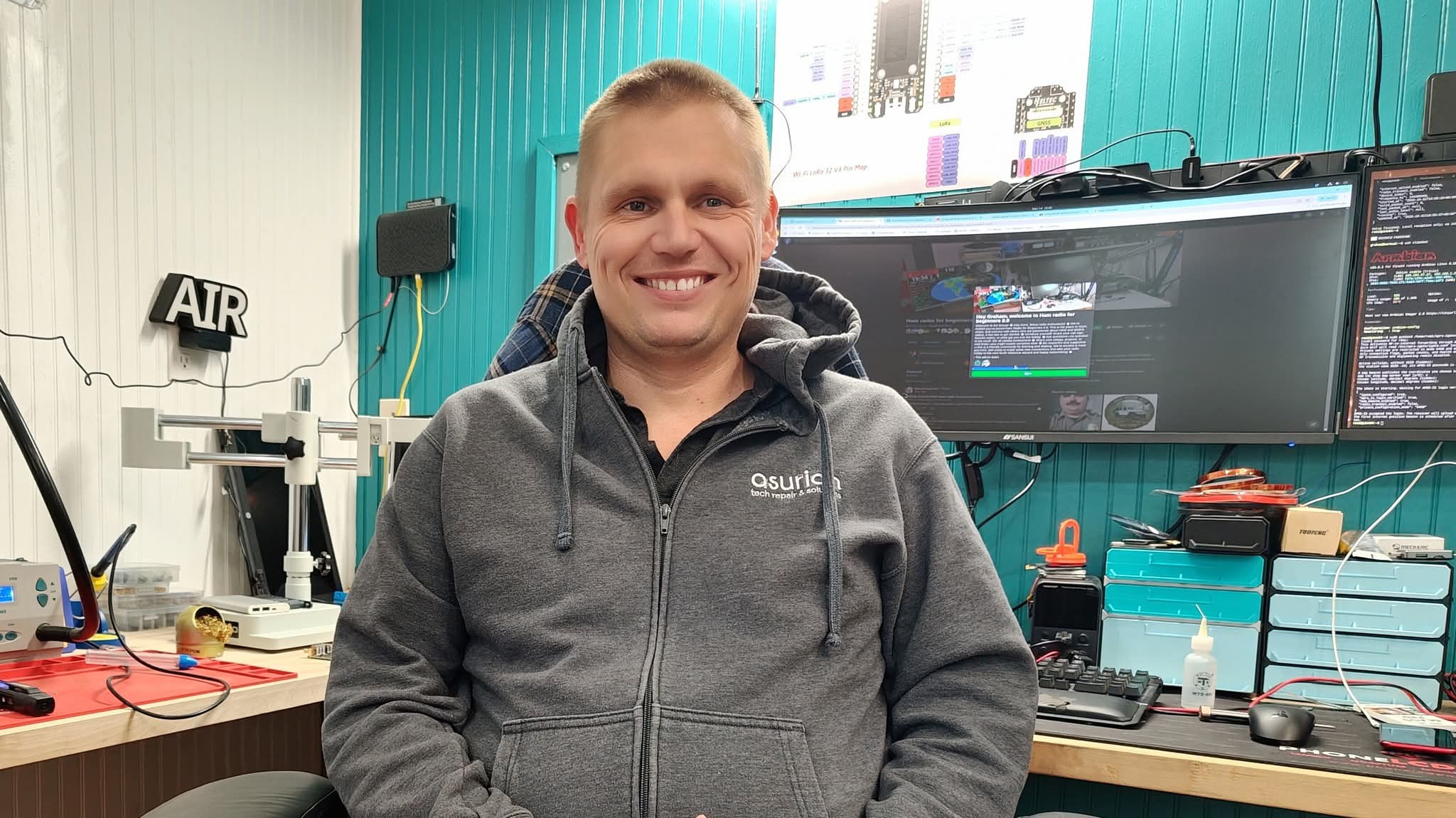
The repair shop has given me access to tools and materials that make amateur radio a particularly enjoyable hobby.
I can solder connectors, repair cables, fabricate small parts, test electronic components, and make modifications without having to start from scratch every time.
Over the years, I've accumulated an assortment of parts that most people would probably throw away.
But that cable from an old power supply might be perfect for a radio.
A discarded enclosure might make a useful project box.
A connector recovered from one device might be exactly what I need for another.
I don't particularly care whether a solution came from a shiny retail package or from a drawer full of salvaged parts.
I care whether it works.
Learning to measure RF
One of my more recent additions has been a NanoVNA antenna analyzer.
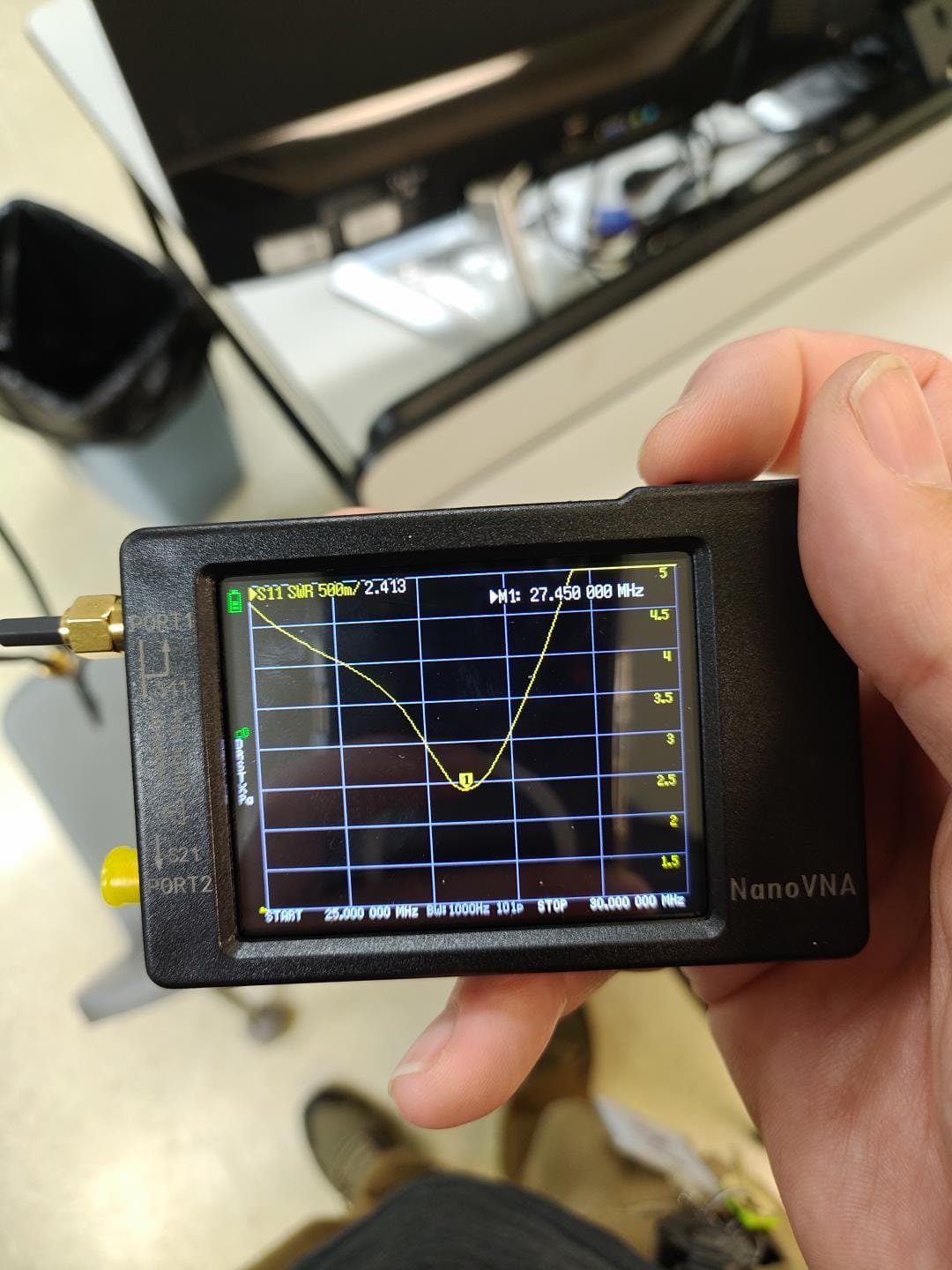
Until now, much of my antenna troubleshooting has consisted of checking the SWR on the radio, adjusting something, and seeing whether the number improved.
The analyzer gives me considerably more information.
I can sweep frequencies, identify resonant points, and begin to understand the behavior of the antennas I'm building.
I'm particularly interested in using it to revisit the EFHW and evaluate future homemade antennas before connecting them to a transmitter.
Chasing noise
I've also been dealing with interference in my mobile VHF installation.
One repeater near Jasper has been especially frustrating.
When I'm driving, the noise increases as I accelerate. It can get bad enough to hold the squelch open and make the repeater practically unusable.
My first attempt was to add a ferrite choke to the radio's power cable.
It didn't solve the problem.
That's useful information, though. Now I know that particular change didn't fix it, and I can investigate other possible paths for the interference.
Maybe it's coming through the power wiring. Maybe it's being picked up by the antenna system. Maybe it's related to something in the vehicle's electrical system.
I haven't isolated the source yet.
But I will.
The point of all this
I didn't get into amateur radio because I needed another hobby where I could buy expensive equipment.
I got into it because I like understanding how things work.
I enjoy finding a problem, digging through the parts bins, building a solution, and seeing whether I can make it work.
Sometimes the solution is elegant.
Sometimes it's ugly.
Sometimes it takes three attempts and a few words I probably shouldn't repeat on the radio.
But there's a particular satisfaction that comes from making something with your own hands and then actually using it.
That's what these projects are about.
Experiment. Send It!
73 — KJ5SHU
Parts I used (and things still on the list)
- NanoVNA: https://a.co/d/04awfj9H
- Ferrite chokes, coax adapters, terminals, heat-shrink and salvaged parts
Additional specific part links and photos will be added as the builds progress.